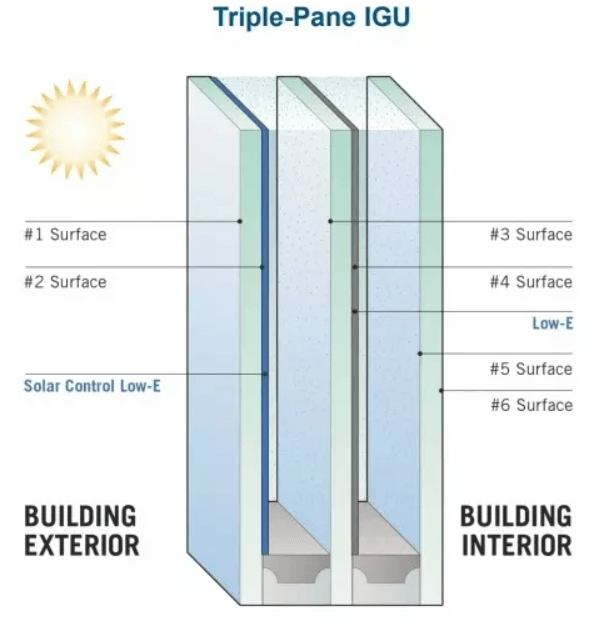
Triple Silver Low-E
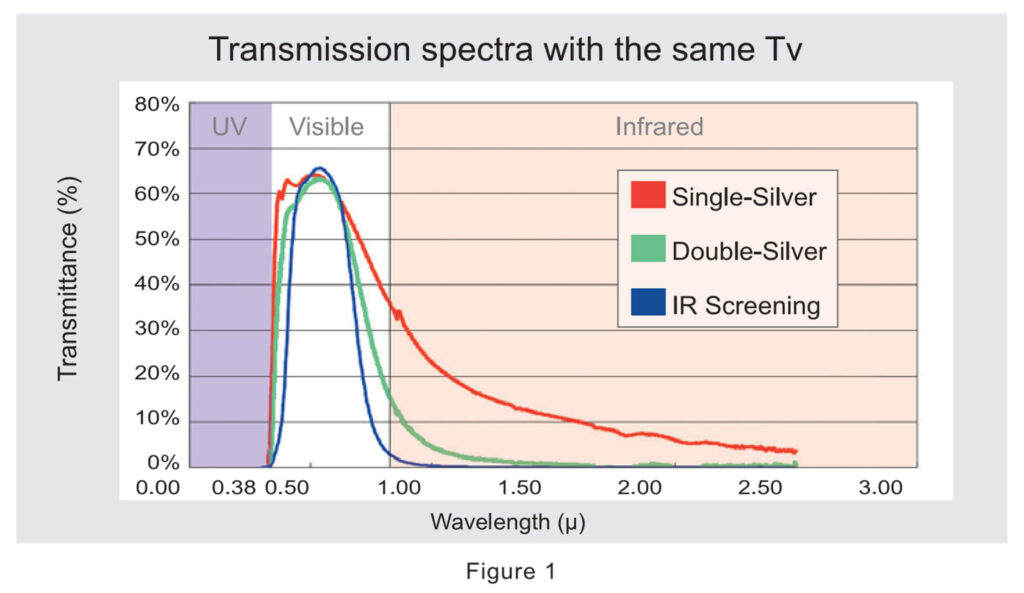
Comparison of different glass products with the same visible light transmittance
Triple Silver Low-E
Low-E IGU glass is also called low emissivity insulated glass or Low-E coated glass, and so on. It consists of 2 or more tempered/float glass sheets, which are one or more sheets with Low E coating. Triple silver IGU glass is Low-E IGU glass with double silver Low-E coating, which performance is better than single silver and double silver low-E coating.
Advantages of Infrared Screening Glass In the solar radiation, about 47% is visible light and 51% is infrared radiation (IR). The incoming solar IR through window glass causes heat accumulation and temperature rise, which is the major heat source of cooling load.
About half of the energy consumption of buildings comes from windows. Improving the energy efficiency of window glass contributes significantly to reducing electrical bills. The application of high-performance, energy-efficient glass plays a crucial role in green building development and energy for society. As the leading energy-efficient glass supplier, Xess sells glass products, namely infrared screening glass, with the latest coasting technology. This special energy-efficient infrared screening glass has the following features:
- Direct solar infrared transmittance below 2% awesome cool in summer
- Emissivity approaching zero, about 0.02, low thermal transmittance.
- High visible light transmittance
Figure 1 shows the transmission spectra of single silver Low-E, double silver Low-E and infrared screening glass with visible light transmittance. Within the infrared region (780nm-2500nm), the area under the transmission curve reflects direct solar IR transmittance. The overall transmittance in the IR region is the sum of direct solar IR transmittance plus secondary transfer, defined as total solar IR transmittance(gir), which quantitatively describes glass characteristics against solar. IR. Much better than single and double silver Low-E glass, as shown, all infrared screening glass products of Xess have a direct solar IR transmittance below 2% and a total solar IR transmittance around 3%, which indicates an extraordinary performance in reducing cooling load creating comfortable working and living environment in hot spaces.