
Solar Control Low-E Coatings
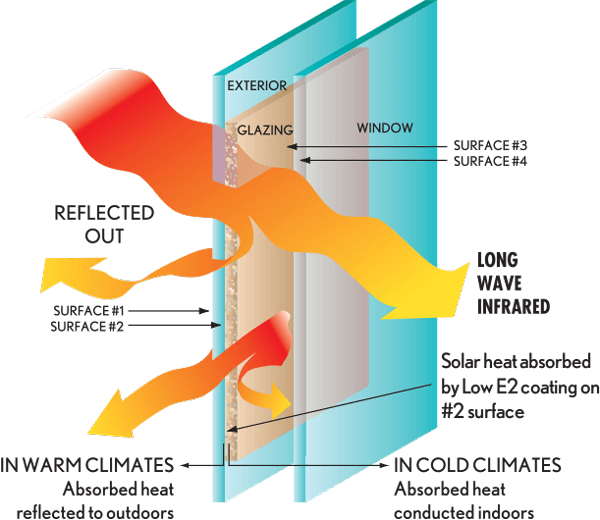
Solar Control Low-E Coatings
Solar control Low-E coatings are manufactured using a process known as the MSVD or sputtered process. This process applies the coating to the pre-cut glass in a vacuum chamber. The layer is not as firmly attached as those used in a pyrolytic process, so a seal and laminate must be applied to keep the bond strong. This coating has a lower emissivity and thus lets less solar energy through the window. For these types of coats, it is generally a thin layer of silver deposited on the window.
Solar control Low-E coatings are generally used in hotter climates where keeping external heat from entering a building is more important.
How Solar Control Low-E Coatings Are Made
With solar control Low-E glass, the coating is applied off-line to pre-cut glass in a vacuum chamber at room temperature. This coating, sometimes called a “soft coat,” needs to be sealed in an IG or laminated unit and has low emissivity and superior solar control performance. The best performing solar control coatings are manufactured in a process known as magnetron sputter vacuum deposition, or MSVD. They are ideal for mild to hot climates dominated by air conditioning.
Features and Benefits
- The Low-E coating reduces the emissivity of glass and lowers the U-factor.
- Low SHGC values result in utility cost savings.
- Provides well visible light transmittance, helping to reduce the need for interior lighting.
- Low internal/external reflection, reducing sun glare and the need for blinds and shades.
- Low UV (ultraviolet) transmittance, reducing UV rays, resulting in minor fading.